
Gum Disease Treatment – Newark, DE
Tackling Gum Disease Early

At White Clay Dental, we do everything we can to treat oral health problems early on, before they have an opportunity to cause permanent damage to your smile. Gum disease is one of the most common oral health problems in the United States, and according to the CDC, it impacts one out of every two adults. That’s why we conduct thorough examinations of your teeth and gums during each of your checkups and cleanings in search of any early signs of the issue. If we do spot it, we’ll quickly develop a customized gum disease treatment plan to tackle the problem before the symptoms become more serious.
Why Choose White Clay Dental For Gum Disease Treatment?
- Individualized Dental Care
- Voted Best Dentist in Newark
- Friendly Dental Team
What is Gum Disease?

Gum disease commonly develops due to poor oral hygiene that allows harmful bacteria to accumulate in your mouth. When they feed off of sugars and carbohydrates found in plaque, they produce waste in the form of enamel-eroding acids and toxins that cause inflammation and a variety of other side-effects. As these toxins take over your mouth, they can cause a gum infection that develops into periodontitis, or gum disease.
When plaque and food debris aren’t frequently cleared away because of brushing and flossing, it allows these harmful substances to build-up and overrun your mouth, symptoms of gum disease as well as other oral health problems, such as cavities.
What are the Symptoms of Gum Disease?
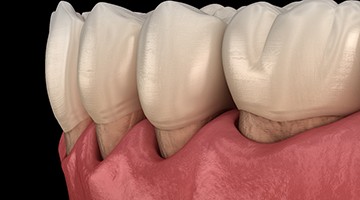
Gum disease in Newark can exhibit a variety of symptoms that range from mild to severe, depending on what stage the disease has had a chance to progress to. Some of the early signs include:
- Red or swollen gums
- Bleeding gums while brushing or flossing
- Chronic bad breath
When the issue is left unaddressed, it can turn into a more advanced form that exhibits severe symptoms, which include:
- Receding gums
- Pockets of bacteria and plaque between the teeth and gums
- Loose teeth
- Permanent tooth loss
- Changes in bite alignment
When you spot any of these symptoms, it’s important to immediately contact our office so we can conduct a thorough examination of your mouth. This will allow us to customize a gum disease treatment plan to address, and hopefully reverse the symptoms you’re experiencing.
How Do We Treat Gum Disease?
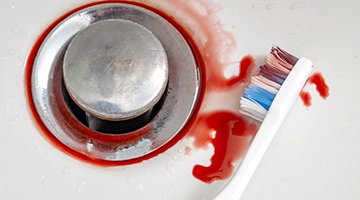
Based on our checkup, we’ll let you know whether you can benefit from scaling and root planing, which is our gum disease treatment. During the procedure, we’ll make sure to remove all plaque and tartar from your teeth and gumline, even as far down as the roots of your teeth if pockets of bacteria have formed. During your next appointment, we’ll smooth out the roots of your teeth to encourage them to reattach to your gums.
After your treatment, we’ll provide you with some instructions to make a fast recovery and ease the tenderness you may feel once your sedation wears off. If you have any questions or concerns following the procedure, be sure to contact our office!
Scaling & Root Planing
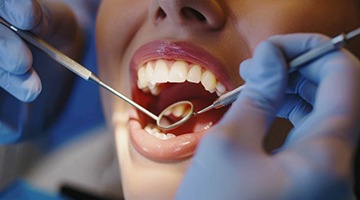
We treat gum disease through a process called “scaling and root planing.” You can think of it as a sort of “deep cleaning” for your smile. The ultimate goal is to remove the harmful bacteria from your gums and help prevent future reinfection. You can learn more about this two-step process by clicking the button below and are more than welcome to contact our team with any questions or concerns you may have.
Do I Need Scaling & Root Planing?

It’s important to note that not every patient with gum disease needs scaling and root planing. Sometimes, increasing oral hygiene efforts at home can stop gum disease in its tracks and restore a patient’s oral health. We typically recommend scaling and root planing in cases where gum disease is more advanced and requires professional bacteria elimination.
The best way to know for sure whether you need a scaling and root planing is to schedule an appointment with Dr. Ganfield or Dr. Bond, but these signs can mean that you need a deep cleaning:
- Bleeding gums, especially while brushing or flossing
- A shrinking gumline
- Chronic bad breath
- Loose or shifting teeth
- Difficulties or discomfort while chewing
The Process of Scaling & Root Planing
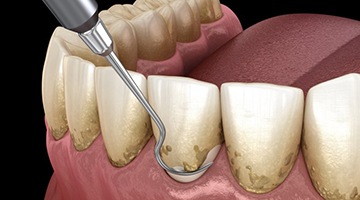
As mentioned earlier, scaling and root planing is a two-step process.
Scaling involves removing plaque and tartar from the surface of your teeth, as well as from the spaces beneath your gumline. Overall, you can expect scaling to be similar to a routine cleaning. We’ll simply also target the areas bacteria like to hide in advanced cases of gum disease.
For root planing, we’ll gently smooth out your dental roots – hence the name. By massaging your gums and the parts of your teeth that are usually hidden underneath the tissue, we encourage your gums to reattach to your pearly whites. This will help keep your teeth secure and make it more difficult for bacteria to reinfect your gums.
Aftercare Tips for Scaling & Root Planing

Aftercare for scaling and root planing is fairly simple. Since we’ll administer a local anesthetic to keep you comfortable during treatment, we recommend waiting until the numbness wears off to eat anything. That way, you can avoid accidentally biting your tongue or soft oral tissue.
As the effects of the anesthetic fade, you may also experience some oral soreness. This can usually be managed with over-the-counter pain relievers. If your discomfort becomes severe, please let us know right away so we can help!
Finally, continue to brush and floss your teeth on a daily basis, taking care to be gentle near your treatment area. You wouldn’t want to develop dangerous bacteria build up, so be sure to make this a priority, and don’t hesitate to ask our team for additional cleaning tips.